
Why Coat a Garage Floor
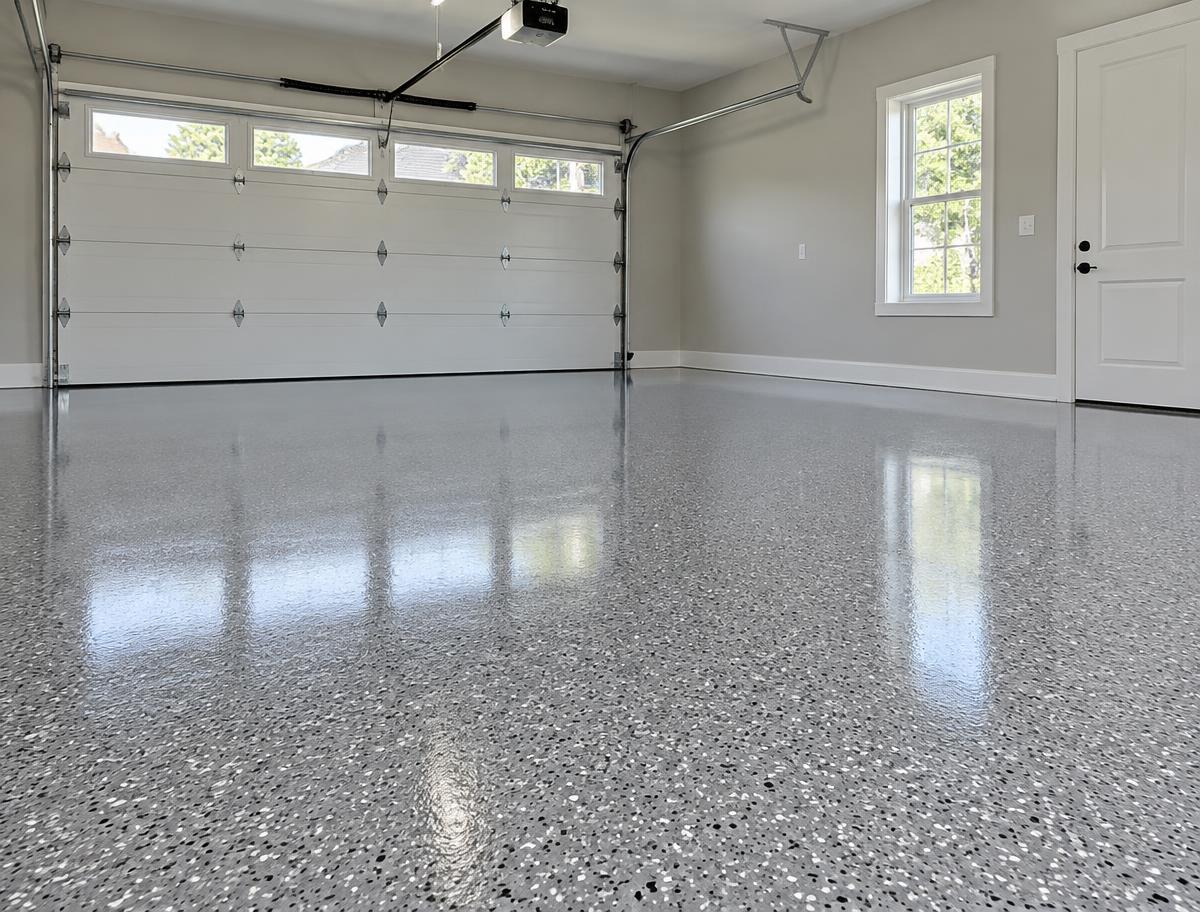
A garage slab was poured to be structural, not attractive. Left open, it absorbs automotive fluids, releases dust, shows every tire mark, and turns chalky with age. Coating it converts the slab into a sealed working surface: easier to clean, noticeably brighter because light reflects instead of being absorbed, and protected against the everyday abuse of vehicles, tools and yard equipment.
For most Polk County homeowners the decision is part practical, part aesthetic. The garage is the door the family actually uses, and a finished floor makes it feel like a room instead of a storage slab. Coatings are a surface improvement though — they protect and transform good concrete, they do not repair a failing slab.
Concrete Preparation Is the Whole Job
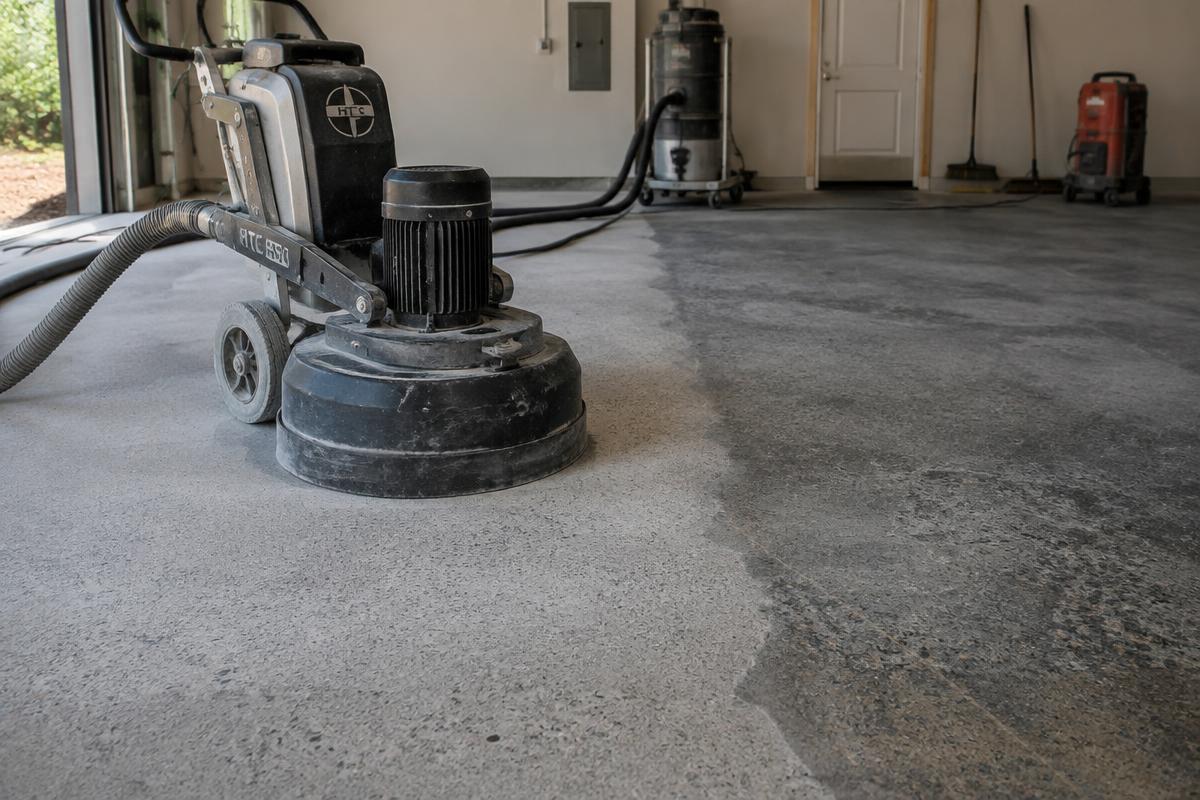
Nearly every coating failure traces back to preparation. Concrete has to be opened up so the coating can mechanically key into the surface, which means diamond grinding (or shot blasting on larger jobs) rather than acid etching or a pressure wash. Cured sealers, adhesives, paint, mastic and old coatings all have to come off.
Preparation also includes cleaning oil out of the concrete, degreasing, vacuuming the dust that grinding produces, and checking for moisture. On a Florida slab a simple moisture test can be the difference between a floor that lasts and one that blisters. If the numbers come back high, a moisture-tolerant primer or a different system may be recommended.
Decorative Flake Garage Floors
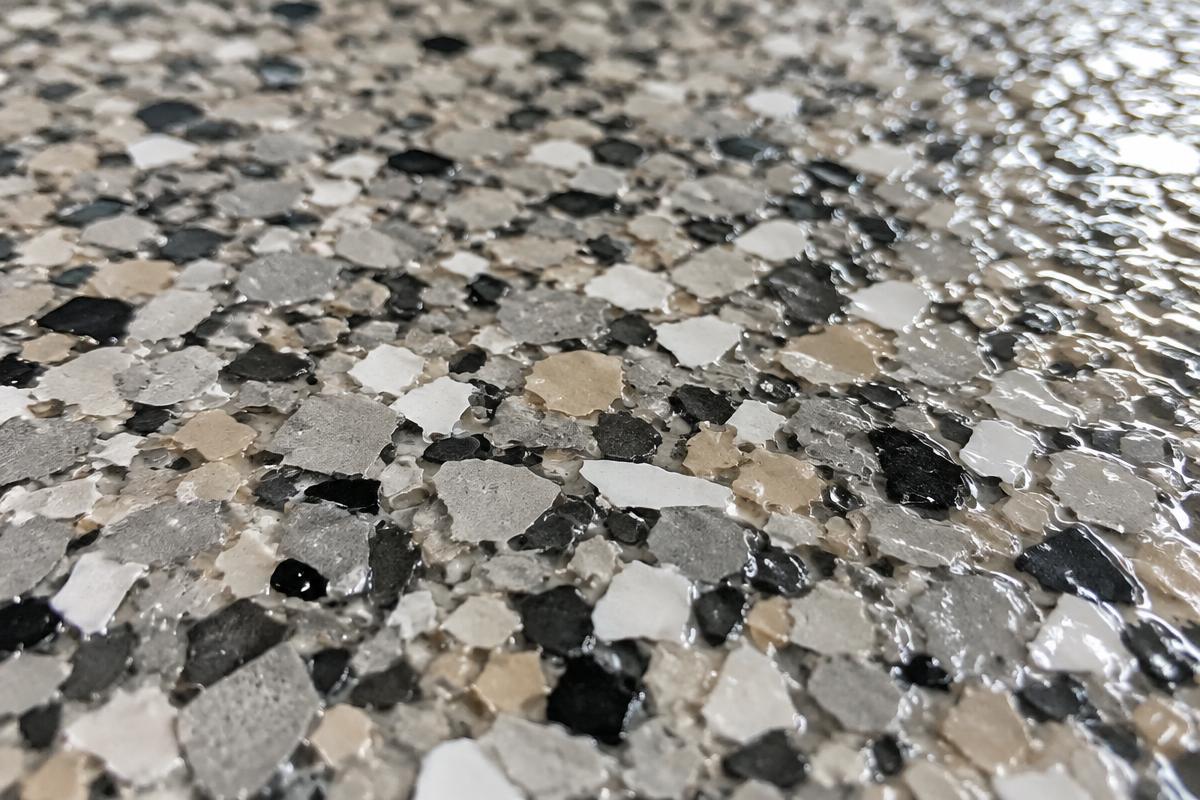
Flake floors are the most requested residential finish. A pigmented base coat goes down, colored vinyl chips are broadcast into it while it is wet, the excess is scraped and vacuumed the next day, and a clear topcoat locks everything in. The chips create a subtle texture underfoot and hide the small imperfections that a solid color would highlight.
Flake blends range from quiet grays and tans that read like stone to higher-contrast black-and-white mixes. Chip size changes the look as well: larger flakes at full coverage give a heavier, terrazzo-like appearance, while lighter broadcasts keep more of the base color visible.
Epoxy Garage Floor Systems
Epoxy is a two-component resin that cures into a hard, thick film. It builds body, levels minor surface irregularities, and bonds extremely well to properly ground concrete, which is why it is so often used as the base or body coat of a garage system.
On its own, epoxy makes a clean solid-color floor at a lower cost than a full decorative build. Its trade-off is sunlight: many epoxies will amber or dull with prolonged UV exposure, so an exposed floor is usually finished with a UV-stable topcoat rather than left as bare epoxy. Cure times are also longer than polyaspartics, which affects how quickly you get the garage back.
Polyaspartic Floor Coatings
Polyaspartics cure fast — often fast enough that grinding, base coat, flake broadcast and topcoat can be sequenced in a compressed schedule. They also hold color and clarity well under sunlight, which makes them the practical choice for the apron area just inside the door, for lanais, and for pool decks.
Because they set quickly, they demand experienced application; there is far less working time than with epoxy. In a typical garage build they serve as the clear protective topcoat over a flake broadcast, with anti-slip additive mixed in when extra traction is wanted.
Concrete Repairs Before Coating
Most garages need some repair work. Common items include hairline and moderate cracks, spalled or crumbling areas near the door line, pitting from de-icing or chemical exposure, control joints that need to be treated or honored in the finished floor, and low spots that hold water.
These are filled with polymer or resin-based repair materials that are compatible with the coating going over them. Cosmetic repairs generally disappear under a flake finish; larger patches may still be faintly visible under a solid color. Cracks caused by ongoing slab movement can reappear over time — a coating covers a crack, it does not stop the movement causing it.
What Installation Actually Looks Like
You clear the garage completely, including anything mounted low on the walls. The crew masks walls and thresholds, grinds the slab with dust-collecting equipment, vacuums, then handles repairs. Base coat goes down, flake is broadcast if your system includes it, and the following step scrapes and vacuums loose chips before the clear topcoat is applied.
Expect the garage door to stay open for airflow during the work and expect to keep vehicles off the floor through the cure window, which is longer than the time it takes to walk on it. Your installer will confirm the actual schedule for the products used and the weather that week.
Maintenance and Long-Term Care
Coated floors are low-maintenance rather than no-maintenance. Dust mop or sweep to keep grit from acting like sandpaper underfoot, wipe up oil, coolant and battery acid promptly, and wash with a mild pH-neutral cleaner and a soft mop or auto scrubber.
Put plywood or pads under jack stands and floor jacks, avoid dragging metal shelving, and be aware that hot tires can stress a poorly bonded coating — another reason preparation matters. Avoid harsh solvents and abrasive pads, which can dull the gloss.
Florida Climate Considerations
Central Florida throws three things at a coating: heat, humidity and moisture from below. Warm slabs shorten working time and can cause products to flash or bubble if applied at the wrong time of day. High humidity affects cure chemistry. And vapor drive through a slab — common on older Polk County homes and slabs poured close to grade without an effective vapor barrier — is the leading cause of coatings letting go months later.
Practical implications: moisture testing before system selection, primers chosen for the conditions found, UV-stable topcoats anywhere sunlight reaches, and scheduling around afternoon storms. It's less about exotic products than about not skipping the evaluation step.
Choosing a Coating System
Work through four questions and the choice usually becomes obvious:
1. How is the concrete?
Stained, cracked or previously coated floors need more preparation, and that drives both the schedule and the estimate more than the coating itself.
2. How much sun hits it?
Exposed aprons, lanais and pool decks call for a UV-stable topcoat. Fully enclosed garages have more latitude.
3. What look do you want?
Flake hides imperfections and offers the widest color range. Solid color is cleaner and simpler but shows more.
4. How wet does it get?
If you park rain-wet vehicles or the surface is near water, ask for anti-slip additive in the topcoat.
Pricing follows the same variables: square footage, concrete condition, preparation required, the coating system, repairs, and the finish you select. That's why an estimate starts with your floor rather than a price list.
Garage Floor Coatings Across Polk County
Local pages cover three of Polk County's larger communities: